
Spokane’s paint conditions are something else entirely. We get scorching summers, hard-freezing winters, and more sunny days than you’d expect, which means UV damage is a very real problem here.
If you pick paint based on generic Pacific Northwest advice, you’re setting yourself up for peeling, fading, and cracking within a couple of seasons. At Clean Guard Contracting, we’ve seen what Spokane’s weather does to a bad paint job, and it’s not pretty.
Spokane’s Climate Is Different, And Your Paint Has to Match It
Spokane sits in an inland, semi-arid zone. It’s not like Western Washington. We don’t get constant drizzle and mild temperatures. We get extremes, both directions, and your exterior paint takes every bit of that punishment.
The average annual temperature swing from summer highs to winter lows in Spokane can exceed 100°F across the year. That’s not a rounding error. That’s a structural problem for paint that isn’t built to flex and hold.
Hot, Dry Summers and What They Do to Paint
Spokane summers regularly push into the high 80s and 90s°F. That heat, combined with low humidity and strong direct sunlight, accelerates UV degradation fast. Paint that isn’t UV-stabilized will chalk, fade, and lose adhesion faster than you’d expect, sometimes within two to three seasons.
Cheaper paints with lower pigment load are especially vulnerable here. The color fades first, then the film itself starts to break down. By the time it’s visibly peeling, the damage underneath is already done. What you need for Spokane summers:
- High UV resistance — look for paints that specifically advertise UV-reflective or UV-blocking pigments
- Heat-stable binders — 100% acrylic latex formulas handle heat expansion far better than oil-based or alkyd paints
- Good hiding power — quality pigment concentration slows the visual fade
Cold, Snowy Winters and the Freeze-Thaw Problem
Winter in Spokane is where budget paint truly falls apart. When moisture gets under a paint film, and the temperature drops below freezing, that trapped water expands. That expansion cracks the film. Each freeze-thaw cycle, and Spokane gets many, opens those cracks wider.
What does this look like on your house? Bubbling. Peeling in strips. Paint is pulling away from the wood at the seams and edges. It usually starts subtly, but by spring it’s obvious.
This is why flexibility in a paint formula matters so much in Spokane specifically. A paint film that can expand and contract with temperature changes will survive these cycles. One that can’t will fail within a couple of winters, sometimes faster.
And if your surface prep wasn’t solid before the paint went on, moisture finds a way in even faster. We’ll come back to that.
UV Exposure (The Silent Paint Killer in Spokane)
Spokane gets roughly 235 sunny days per year. For context, that’s more than Miami. Most homeowners don’t think of Spokane as a high-UV environment, but the data says otherwise. Southern and western-facing walls take the hardest hit, direct afternoon sun, day after day, without the cloud cover that shields homes in wetter climates.
Fading is the first visible sign. But UV also breaks down the paint’s binder, making it brittle and porous. Once that happens, moisture penetration accelerates everything else.
If your home has south or west-facing siding that’s looking dull or chalky while the north side still looks decent, that’s UV damage. It’s not bad luck. It’s physics.
How to Actually Choose the Right Exterior Paint for Spokane
Okay, so Spokane is tough on paint. You already knew that, maybe. But here’s where people get tripped up: they focus on brand names when they should be focusing on formula characteristics and application conditions. Let’s walk through what actually matters.
- Go 100% Acrylic — Every Time.
This isn’t really debatable for Spokane’s climate. 100% acrylic latex paint outperforms everything else in freeze-thaw conditions, UV environments, and temperature extremes. Here’s why:
- Acrylic binders stay flexible across a wider temperature range than oil-based or vinyl-acrylic blends
- They breathe, meaning trapped moisture vapor can escape rather than building pressure under the film
- They hold color better under UV than most alternatives
- They’re more resistant to mildew, which matters during Spokane’s wet shoulder seasons (spring snowmelt, late fall rains)
Within the 100% acrylic category, premium lines from Sherwin-Williams (Duration® and Emerald® Exterior), Benjamin Moore (Aura® Exterior), and Miller Paint (StratusXT) all perform well in inland Northwest conditions. The keyword is “premium” — there’s a real, measurable difference between budget and professional-grade acrylics in terms of film thickness, pigment density, and additive packages.
Don’t let anyone sell you on “comparable quality at a lower price” on a Spokane exterior. The savings you see upfront, you’ll pay back in labor and materials when it fails early.
- Finish Matters More Than You Think
The sheen level you choose affects how your paint handles moisture, dirt, and UV, not just how it looks. For Spokane exteriors, here’s a practical guide:
- Satin finish for siding: The best all-around choice. Enough sheen to resist moisture and allow cleaning, not so much that it magnifies every surface imperfection.
- Semi-gloss for trim, doors, and windows: Higher sheen means better durability where things get touched, bumped, and exposed to concentrated moisture (like around window frames where snow collects).
- Flat or matte only for rough masonry or stucco: Flat finishes hide texture imperfections well, but don’t use them on smooth siding; they absorb too much moisture and dirt in Spokane’s conditions.
One thing worth flagging: if your painting contractor recommends a flat finish on your wood siding to save money on paint, that’s a red flag. Flat on smooth siding in a climate like Spokane’s is a maintenance problem waiting to happen.
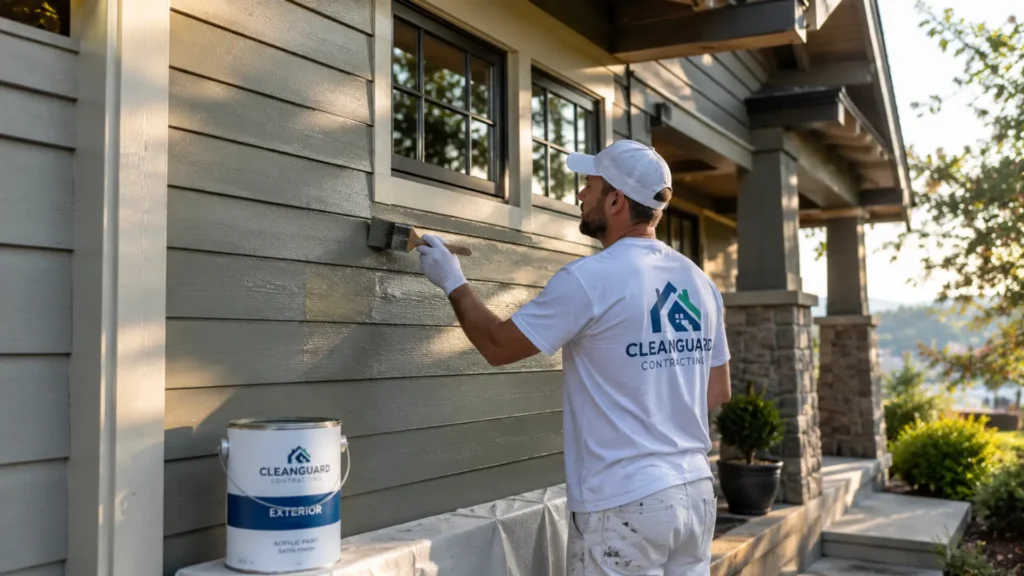
How to Save Yourself from a Bad Paint Job Before You Even Start
This is the part of the conversation most homeowners want to skip, and it’s exactly where most paint failures in Spokane originate. The best paint in the world applied over poorly prepared surfaces will fail in Spokane’s climate. It’s not a matter of if. It’s when.
What proper exterior prep looks like in Spokane:
- Pressure washing — removes dirt, chalking from old paint, mildew, and loose debris. Not optional. A good paint contractor won’t skip this.
- Scraping and sanding — any failing, peeling, or bubbling paint must come off. Painting over it just traps the problem.
- Caulking — every joint, seam, window frame, and penetration needs fresh caulk where the old caulk is cracked or missing. This is where moisture enters.
- Spot priming or full prime coat — bare wood must be primed before finish coats. If the surface is in rough shape, a full prime coat before two finish coats is the right call, not a luxury.
Our interior and exterior painting process at Clean Guard Contracting is built around surface prep first, because we’ve seen what happens when it’s rushed. A paint job that lasts 7–10 years versus one that starts failing in 2–3 almost always comes down to what happened before the first drop of finish coat was applied.
How to Avoid a Painting Disaster: It’s All in the Timing
Spokane’s seasonal extremes make timing genuinely important. Paint needs the right conditions to cure properly, and if it doesn’t cure properly, even good paint will underperform. The practical rules for Spokane:
- Best window: Late spring through early fall, roughly May through September. Temperatures are stable, humidity is low, and you get a good dry time between coats.
- Temperature floor: Most quality exterior acrylics need surface temperatures above 50°F at application and for several hours after. In Spokane, that rules out most of November through March for outdoor work.
- Watch for frost: Even if daytime temps are fine, if overnight temps are dropping below freezing, you risk the fresh paint film not curing properly.
- Avoid high-heat application on sun-baked surfaces: Painting a south-facing wall during peak afternoon sun in July can cause paint to dry too fast, leaving brush marks and reducing adhesion. Shade the surface or work early.
If a contractor is offering you a significantly discounted exterior paint job in October or November in Spokane, ask them specifically how they’re managing application temperatures. If they don’t have a good answer, that’s your answer.
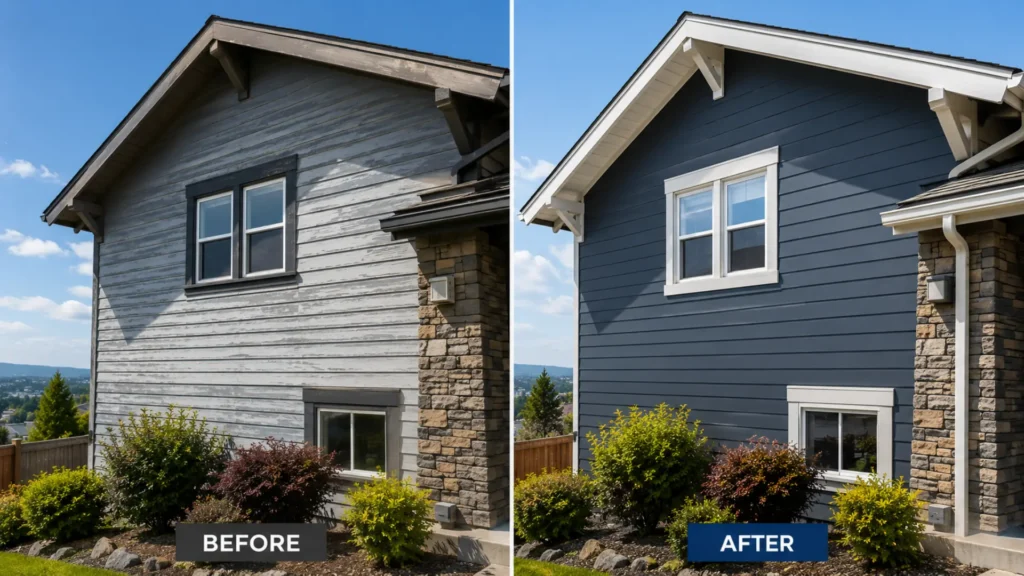
How to Paint Your Spokane Home and Actually Have It Last
Spokane’s climate doesn’t forgive shortcuts. The combination of intense UV, hard freeze-thaw cycles, and genuine temperature extremes means your exterior paint does heavy work year-round. If the formula, finish, prep, or timing is wrong, you’ll see it within a season or two.
The good news is this isn’t complicated once you know what to look for. Go 100% acrylic. Choose the right finish for each surface. Insist on real surface prep. And time the job properly. That’s genuinely the whole framework. If you’re not sure your current paint is holding up or you’re thinking about a repaint, reach out to Clean Guard Contracting. We know Spokane’s climate because we work in it every day.