
When a Deck Fails, Liability Follows
A few years ago, a routine property tour turned into a lawsuit overnight. A tenant stepped onto a second-story deck. The railing gave way. No warning. No obvious signs the week before. Just one failed connection and a long trail of legal fallout after.
Stories like this aren’t rare. Deck collapses, and failures send thousands of people to the ER every year. And when they happen on managed properties, the question isn’t if liability will be assigned. It’s to whom…
For property managers in Spokane, decks sit in a tricky space. They’re exposed to weather, aging quietly, and used daily. Which means safety isn’t optional, it’s part of your duty of care.
This guide breaks down where deck risks hide, when wear becomes negligence, and how to inspect with liability in mind.
The Hidden Liability Risks in Aging Decks (Not Hidden Anymore)
Decks don’t usually fail dramatically. They fail slowly. Quietly. And that’s what makes them dangerous from a liability standpoint.
What looks “fine” during a walkthrough can still be structurally compromised underneath. And when an incident happens, hindsight gets very sharp, very fast.
Legal Consequences Property Managers Face After Deck Failures
After a deck-related injury, investigators don’t ask whether the failure was intentional. They ask whether it was foreseeable.
If a deck is aging, exposed to moisture, or past its expected service life, property managers are expected to act. Courts often look at inspection records, maintenance logs, and whether warning signs were ignored.
And “we didn’t know” doesn’t carry much weight if a reasonable inspection could have revealed the issue. Especially when the deck is accessible to tenants, guests, or the public.
Insurance Claims Data Most Property Managers Overlook
Insurance claims tied to deck and railing failures tend to follow a pattern. High medical costs. Long claim durations. And frequent disputes over responsibility.
Why? Because decks fall into a gray zone. They’re not always inspected as rigorously as roofs or foundations, yet they cause serious injuries when they fail. Insurers increasingly scrutinize deck maintenance documentation, and missing records can lead to denied or reduced coverage.
In other words, poor documentation doesn’t just increase risk. It weakens your protection when you need it most.
When “Normal Wear” Quietly Becomes Negligence
Every deck ages. That’s normal. What’s not normal is assuming visible wear is the only thing that matters.
Loose railings. Rusting fasteners. Soft spots near posts. Water is pooling where it shouldn’t. These are all early warnings that often get dismissed as cosmetic or “something to watch later.”
But legally speaking, once deterioration is visible or should have been visible. It’s no longer just wear. It’s a known risk. And unaddressed known risks are where negligence claims take root.
Decks don’t suddenly fail. They send signals first. The liability starts when those signals are ignored.
8 Critical Deck Safety Checks Property Managers In Spokane Should Never Skip
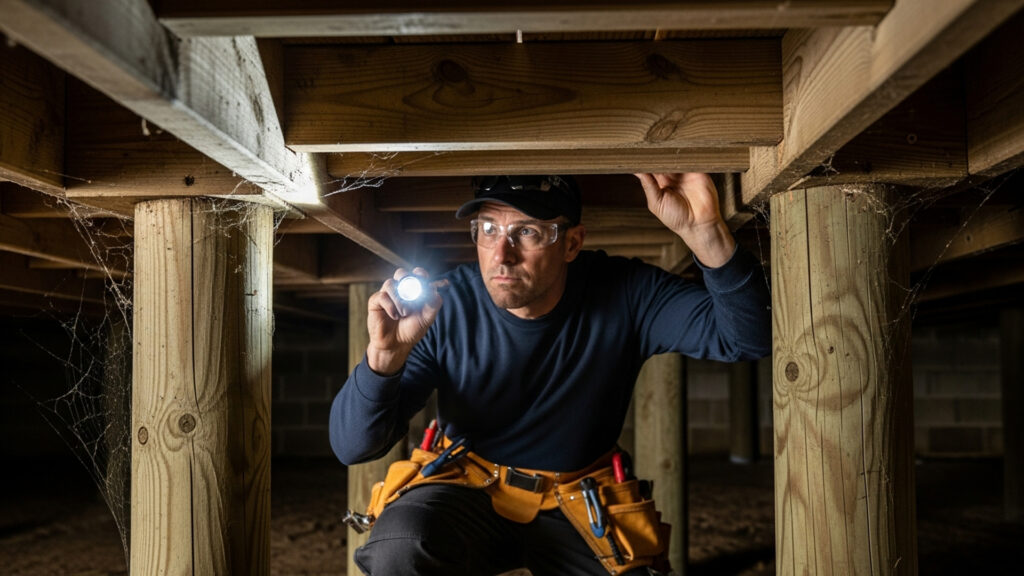
Most deck failures don’t happen because someone ignored everything. They happen because a few small things were missed over time.
When you’re inspecting a property, these are the areas that matter most, not cosmetically, but structurally and legally.
- Structural Integrity: Ledger Boards, Joists, and Posts
This is the backbone of the deck. And honestly, it’s where the most serious failures start.
Look closely at where the deck attaches to the building. The ledger board should be solid, properly flashed, and tightly fastened. Gaps, staining, or movement here are red flags.
Underneath the deck, check joists and posts for sagging, cracking, or softness. Press with a screwdriver. If it sinks in easily, that’s not “age.” That’s decay.
- Railing and Guardrail Code Compliance
Railings aren’t decorative. They’re fall protection. Give them a firm shake. They should feel rigid, not flexible. If a railing moves with light pressure, it’s already a problem.
Height matters too. Many older decks were built to outdated codes. If railings are too low or baluster spacing is too wide, they may no longer meet safety standards, and that matters after an incident.
- Surface Condition and Trip Hazards
This is what tenants interact with every day.
Look for lifted boards, splintering, uneven transitions, and slick surfaces, especially in shaded or damp areas. Small trip hazards lead to big claims.
Pay attention to stairs. They take more abuse than flat decking and often deteriorate faster.
- Fastener Corrosion and Connection Points
Nails and screws are easy to overlook until they fail.
Check for rust, missing fasteners, or mismatched hardware. Corroded connectors weaken the entire structure, especially in older pressure-treated wood decks where incompatible fasteners were used.
If connections look improvised or inconsistent, that’s worth documenting and addressing.
- Water Damage and Rot (Use This Simple Check)
Water is the silent killer of decks. Here’s a quick checklist:
- Dark staining around posts and beams
- Soft spots near stairs or entry points
- Mold or persistent moisture underneath
- Wood pulling away from fasteners
If water has a path, it will find it. And rot usually spreads long before it’s obvious from above.
- Inspection Frequency by Deck Age and Material
Not all decks age the same. Inspection frequency should reflect that.
- Pressure-treated wood: inspect annually
- Composite decking: inspect every two years
- High-traffic or commercial properties: inspect quarterly
Waiting until something “looks wrong” is usually waiting too long.
- Stair Integrity & Handrail Stability
Deck stairs see the most foot traffic and show wear first. Check for loose treads, uneven riser heights (code violation), and wobbly handrails. Spokane’s freeze-thaw cycles crack stair stringers and loosen fasteners. Test every handrail with 200-pound pressure; if it shifts, it fails code. Missing or rotted stair risers create trip hazards that trigger tenant lawsuits.
- Load-Bearing Capacity & Weight Distribution
Decks must support 50 lbs per square foot (residential code minimum). Sagging joists, cracked beams, or bouncy surfaces signal overload or structural failure. For Spokane properties with snow loads (25-35 lbs/sq ft average), winter deck collapse risk increases without proper reinforcement. Test high-traffic areas and corners where tenants gather.
DIY Inspections vs. Professional Deck Assessments
Some checks are reasonable for property managers to handle. Others shouldn’t be guessed at.
What Property Managers Can Check Themselves
You can and should regularly check:
- Railing stability
- Surface hazards
- Visible fastener issues
- Obvious water damage
- General movement or shifting
Document what you see. Dates matter. Photos help.
These routine checks show diligence. And diligence matters in liability conversations.
Red Flags That Require Professional Evaluation
If you notice any of the following, it’s time to call a deck reapir or construction professional:
- Structural movement or sagging
- Rot near ledger boards or support posts
- Railings that don’t meet code
- Repeated water intrusion issues
- Decks older than their expected lifespan
These aren’t cosmetic fixes. There are safety issues.
And guessing here doesn’t protect you; it exposes you.
Documentation Requirements for Liability Protection
This part gets overlooked. And it shouldn’t.
Inspection logs, repair records, and professional assessments create a paper trail that shows proactive management. If an incident occurs, that documentation becomes your strongest defense.
No records often look like no action, even when that’s not true.
Deck Safety Is A Part of Your Responsibility.
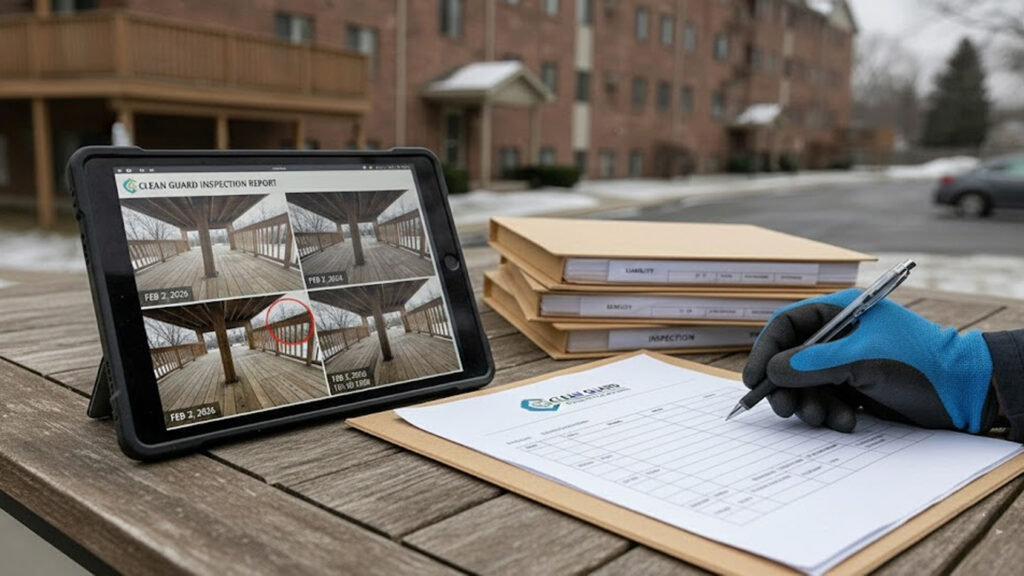
Decks don’t usually fail without warning. The warning signs are just easy to miss when no one’s looking closely enough.
For property managers, deck safety is about diligence. Regular inspections, clear documentation, and knowing when to bring in professionals protect your tenants and your liability exposure. And when something does go wrong, those steps matter.
In Spokane, Clean Guard Contracting provides professional deck inspections and repair services designed for property managers who want clarity. We identify risks early, document findings properly, and recommend practical solutions before small issues become major problems.
If you’re managing aging decks, now’s the time to take a closer look. Schedule a deck safety inspection with Clean Guard Contracting today.